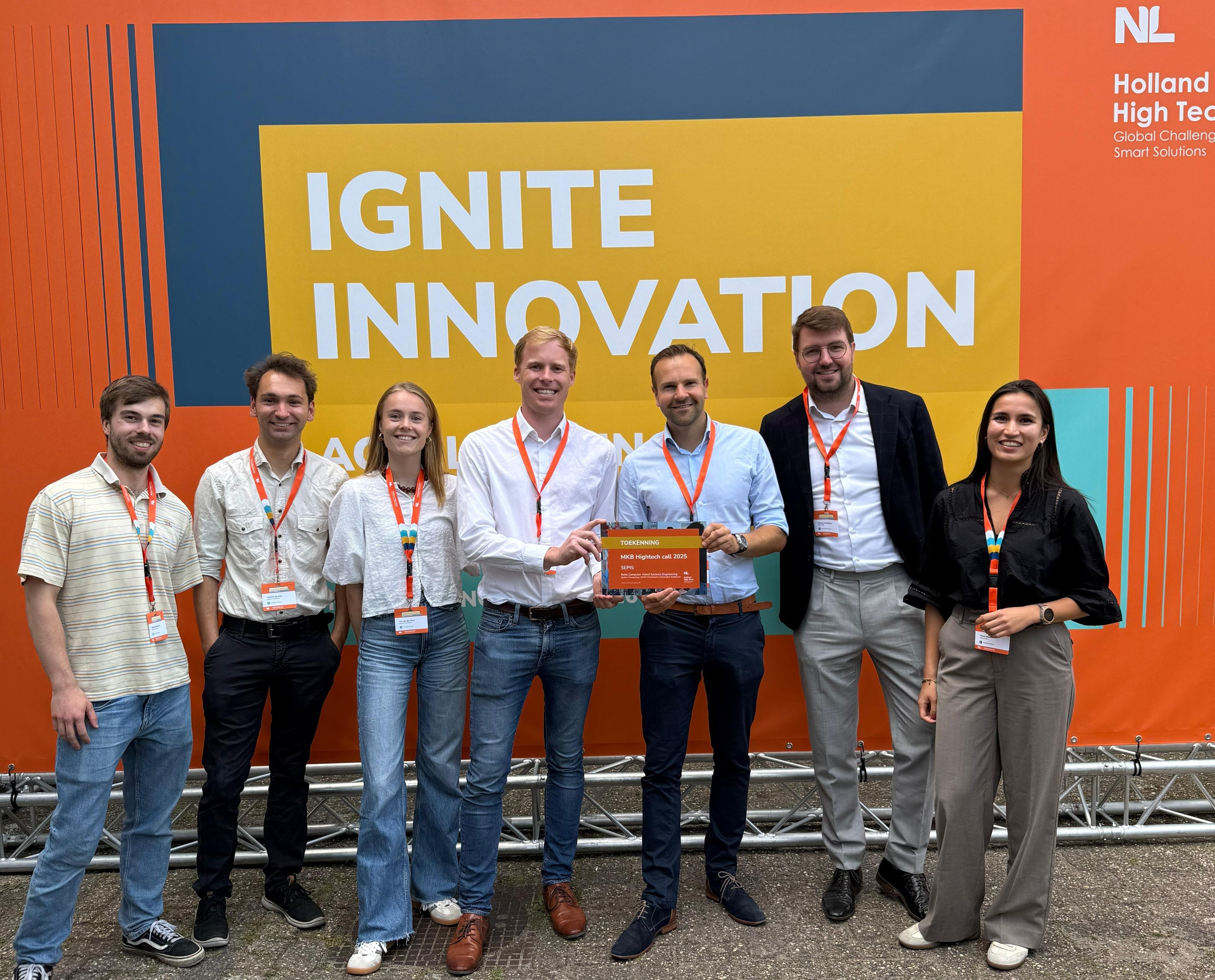
Ignition Computing is pleased to announce the newly awarded SEPIS (Systems Engineering for Physics Intensive Systems) project. This two-year collaborative initiative has received funding through the Holland High Tech MKB Hightech Call 2025, and brings together expertise in systems engineering and physics-based modelling to advance next-generation fusion systems.

SEPIS unites four partners from industry and academia: Ratio Computer Aided Systems Engineering, Ignition Computing, Eindhoven University of Technology (TU/e), and DIFFER. The project addresses the challenges of developing highly complex, physics-intensive systems by connecting top-down systems engineering approaches with bottom-up simulations. By combining systems engineering methods with integrated plasma physics models, the consortium aims to develop scalable modelling approaches that support more efficient design and assessment of complex fusion systems. More information on the project objectives is available in the public project summary published by Holland High Tech.
For Ignition Computing, SEPIS provides an opportunity to build on our experience in modelling and simulation for fusion applications, including our contributions to ITER-related projects, to help bridge the gap between systems engineering and high-fidelity physics models, and to advance methods that support the development of reliable fusion technologies and other complex engineering systems.
The MKB Hightech Call 2025 is a Dutch innovation programme that promotes collaboration between high-tech SMEs and research organisations to accelerate the development and commercialisation of advanced technologies.